Showing posts with label uzbekistan. Show all posts

Wednesday, November 11, 2009

Central Asian Internet Penetration from World Bank

Today Google announced public data available from World Bank integrated into Google Search.

Below you can see graph with Internet penetration in Central Asian countries:


Link: Internet Penetration in Central Asia 1997-2008

Internet penetration seems to be several times higher, thus more optimistic, comparing to data from ITU for all countries (see also 'at a glance' articles of this blog for each country: KZ KG TJ TM UZ).

Sunday, November 8, 2009

Facebook reached Odnoklassniki in Kazakhstan?

In Google Trends, tool which compares search volume for given queries, you can see that Facebook has now caught Odnoklassniki by Google search queries numbers in Kazakhstan.

As you can see on the graph Odnoklassniki queries emerged in the country in November 2007 since then it boomed until middle 2008. Facebook raised in October 2008 and started to catch up with Russian social network in September 2009.


Link: Google Trends - Facebook vs Odnoklassniki in Kazakhstan

Top cities in Kazakhstan where Odnoklassniki is more popular:
1. Kustanay*
2. Koshetau*
3. Karaganda*
4. Pavlodar*
5. Astana
6. Chimkent*
7. Almaty*
8. Atyrau

* - more queries than Facebook

Top languages for Odnoklassniki queries:
1. Russian
2. Kazakh
3. English

Top cities in Kazakhstan where Facebook is more popular:
1. Atyrau*
2. Astana*
3. Chimkent
4. Almaty

* - more queries than Odnoklassniki

Top languages for Facebook queries:
1. Turkish
2. Italian
3. English
4. Kazakh
5. Russian

From language data possible guess could be that Turkish expats are ones of the heaviest Facebook users in Kazakhstan. What is your opinion on that? Why do you think Italian is also so high? Please add your comments below.

What about other Central Asian countries? Unfortunately there is not enough search volume for Kyrgyzstan, Tajikistan and Turkmenistan. There is some data for 2009 for Uzbekistan though. Odnoklassniki seem to dominate for now.


Link: Google Trends - Facebook vs Odnoklassniki in Uzbekistan

At a glance:

Odnoklassniki
Launched: 2006/03
Registered users: 30'000'000 (2009/02)
http://blog.quintura.com/2009/02/26/odnoklassnikiru-hits-30-million-registered-users/?owa_from=feed&owa_sid=

Facebook
Launched: 2004/02/04
Registered users: 100'000'000 (2008/08)
Active users: 150'000'000 (2009/01)

Wednesday, February 27, 2008

Number of Uzbek Internet Users Exceeds 2.01 Million

The number of Internet users in Uzbekistan exceeded 2.01 million, the Uzbek agency for communication and information (UzACI) said in a press release.

As of 1 January 2008, more than 780 entities were providing data transfer services, including Internet access. There are currently more than 6,000 active domains in the national domain zone UZ.

Mobile subscribers amounted to 5.888 million as of 1 January, having increased by 3.168 million during 2007.

The number of companies and organizations producing software in Uzbekistan was more than 210 at the end of last year.

According to UzACI, enterprises of the ICT sector provided services worth 882 billion soums last year, of which 517 billion soums or 58.6% were services to the population.

Source: UzDaily

Webstan note:
Number of Internet users in Uzbekistan in May 2007 [source: ITU] used to be 1,745,000 users or 6.6% of population. CIA.gov estimate of current population is 27,780,059 (July 2007), it means penetration rate has grown up by 0.6% in half-year up to 7.2%.

Saturday, February 23, 2008

Freedom of Speech in the Internet in Central Asia 2008


Reporters without Borders published new reports about freedom of speech and specifically Internet censorship. Here are reports on Central Asian countries:

Freedom of Speech in Kazakhstan [Internet cases]
Freedom of Speech in Kyrgyzstan
Freedom of Speech in Tajikistan [Internet cases]
Freedom of Speech in Turkmenistan [Internet cases]
Freedom of Speech in Uzbekistan [Internet cases]

Uzbek .uz Domains Reach 6000

Uzbek Telecom reported that .uz domains registrations reached 6,000 milestone in 14th of February.

It's an increase of 2,000 domains versus the same period last year. The total number of domains registered last year was 3,224, and 1,069 were removed.

There are seven official domain registrar companies in Uzbekistan. The registration fee is between USD 18 and USD 25.

Source: Telecom Paper

IT Cooperation between Russia and Uzbekistan

Boris Yevgenyevich Atamanov, the head of Russian trade representative office in Uzbekistan told about perspectives and conditions of economic relations between Uzbekistan and Russia during his interview with Uzbekistan Today.

Here is his opinion about IT cooperation between the countries:

[...]

UT: The cooperation in high technology between our countries also intensifies. What projects are planned in this sector?

BA: - That’s true; information technology today along with fuel-energy complex is one of the most developing sectors of mutual cooperation.

The investment volume of Mobile Tele Systems public corporation (MTS) in Uzbekistan economy made up US$250 million. The Russian “VympelCom” also intends to invest US$150 million into cellular communications in Uzbekistan.

Russian Eventis Telecom Investment Company has invested US$5 million in internet services in Uzbekistan in 2007.

[...]

Full interview: Uzbekistan Today

Friday, February 22, 2008

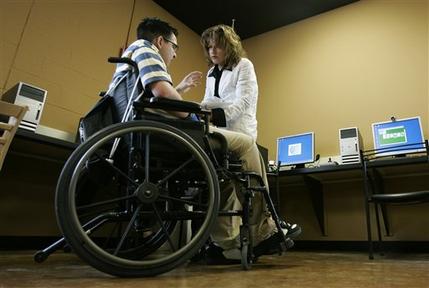
Free Internet for Disabled in Uzbekistan


USDB, Uzbek Society of Disabled People, started up a project that provides free Internet access for disabled in 6 out of 14 regions of Uzbekistan. But there are more regions planned to be covered.

This project gives a free Internet access possibility to about 2 million disabled people in Uzbekistan in total. It was realized with the help of by Uzbek Ministry for Foreign Economic Relations and Government of Japan.

Source: Infocom.uz (Russian language)
Representative photo is used from physorg.com

PCs with Mobile Broadband from Microsoft and MTS in Central Asia

Software giant Microsoft is working with Mobile TeleSystems OJSC (MTS) to launch their subscription based program in in Armenia, Belarus, Russia, Turkmenistan, Ukraine and Uzbekistan.

The two companies would now offer Windows-based PCs on a subscription basis in those countries similarly to the service provided by Microsoft in Mexico and Brazil. The partnership between them was announced at the Mobile World Congress in Barcelona.

It's planned to start providing work stations with Windows Vista and built-in mobile broadband access by June 2008.

Source: TechWhack.com

Thursday, February 14, 2008

Facebook Usage Update. Uzbekistan


Here is the introductory post about Facebook usage statistics by Uzbekistan users:
Uzbekistan is in Top 75 Countries in Facebook

Uzbekistan is still the only Central Asian country in Top 75 countries using Facebook. Here you can see the growth of Uzbek Facebook users:

Population: 27 372 000 [Wikipedia, UN estimate, mid year 2007]
Internet Penetration: 1,745,000 users / 6.4% [May, 2007 ITU]
Facebook users 08/12/2007: 1 766 (rank 71; ~0,10% of all users)
Facebook users 08/01/2008: 2 069 (rank 70; ~0,12% of all users; +17.16%)
Facebook users 08/02/2008: 2 351 (rank 71; ~0,14% of all users; +13.63%)

More data: SEO & Web Marketing News. Canadian Blog

Wednesday, February 6, 2008

Uzbekistan Was The Fastest Growing Mobile Market in Whole Eurasia in 2007

In its "Mobile Freakonomics" article Createlf web-site mentions Uzbekistan as the fastest growing mobile market in Eastern Europe in 2007 with 130% year-on-year growth in the last quarter and Bhutan as the fastest growing in Asia reaching over 100% year-on-year growth in some quarters of the year.

Uzbek Regulator Allows Vimpelcom to Acquire Golden Telecom

TASHKENT, Feb 01, 2008 (AsiaPulse via COMTEX)

The State Committee of Uzbekistan for Demonopolisation, Support of Competition and Entrepreneurship of the Republic of Uzbekistan has approved the acquisition of 100 per cent shares of Golden Telecom by the Russian VimpelCom.

Golden Telecom has a more than 54 per cent share in Buzton JV (Tashkent) one of the leading alternative communication operators in Uzbekistan. Other founders of Buzton are the national operator UzbekTelecom and the United State's NCI Projects International Inc. VimpelCom in turn has the second largest share in Unitel LLC, a mobile operator in Uzbekistan.

The Federal Anti-Monopoly Service (FAS) of Russia has allowed VimpelCom to sign the deal on the acquisition of Golden Telecom. On 14 January the agency approved the petition of its subsidiary, Lillian Acquisition, to acquire the Russian subdivisions of Golden Telecom.

For the deal to be completed, VimpelCom had to get the approvals of the state antimonopoly agencies of the countries where Golden Telecom operated. Two of them are the Central Asian nations of Uzbekistan and Kazakhstan.

The Antimonopoly Committee of Uzbekistan said VimpelCom submitted a request for the acquisition of Golden Telecom on 18 January 2008. The Uzbek regulatory agency was the first to respond: according to the legislation of Uzbekistan, the decision on the request had to be made within 10 working days from the day of submission.

VimpelCom plans to submit the same type of request to the authorised agency of Kazakhstan as soon as possible. The agency should receive the application within the next seven days. According to Kazakh regulations the authorised agency is allowed 30 days to produce a decision, but this period may be extended to 60 days, Golden Telecom said.

Apart from the two Central Asian countries, VimpelCom also submitted a request to the Antimonopoly Committee of Ukraine on 17 January. The regulatory agency is allowed to prolong the time allowed for consideration of the request for as long as three months, to study the details of the deal.

On 18 January VimpelCom sent the shareholders of Golden Telecom an official offer to acquire 100 per cent of their shares at the price of US$105 for a share. The offer is valid until 15 February 2008. In order to complete the deal VimpelCom will have to collect 63.3 per cent of GT's shares. For this, it only needs to agree with the main shareholders of the Holding: Russian Altimo (26.6 per cent), Norwegian Telenor (18.3 per cent), RosTelecom (11 per cent), and Inure Company (8 per cent).

After the closure of the offer, the unsold shares of Golden Telecom will be converted into the right of acquisition for US$105 for a share and annulled.

The acquisition of Golden Telecom by VimpelCom (Beeline) will have no effect either on future acquisitions of the latter nor the size and the policy of its dividends. This was stressed by the Director General of VimpelCom Alexander Izosimov during a telephone conference. He said that the low level of his company's debt allows it to continue to make new acquisitions if needed.

Izosimov noted that the acquisition of the Golden telecom would allow VimpelCom to save about US$470 million within the next three years through the savings on capital investments and operational expenses. Moreover, as a result of the integration of the two companies VimpelCom's revenue is likely to grow not only through the inflow of new clients, but also through additional payments for new services which will be made available to the existing clients after the acquisition, he added.

According to Uralsib analysts, the results of the telephone conference with Izosimov turned out to be as expected, and consequently, the experts have not changed their opinion that the deal is unlikely to bring VimpelCom any income growth, RBK wrote. At the same time, the businesses of VimpelCom and Golden Telecom may become mutually complementary, as VimpelCom holds a strong position in the retail services market, and Golden Telecom in the corporate services market.

The VimpelCom Group includes mobile operators providing services in Russia, Kazakhstan, Ukraine, Tajikistan, Uzbekistan, Georgia, and Armenia. The licenses of the VimpelCom group of companies for the provision of GSM and 3G standard services cover the territory populated by some 250 million people. The Norwegian Telenor company has 29.9 per cent voting shares in VimpelCom and Altimo (formerly Alfa-Telecom) 44 per cent.

Golden Telecom is the supplier of integrated telecommunication and Internet services in the largest cities of Russia and the CIS, that have their own resources and communication facilities. The company's main shareholders are Alfa-Group (29.5 per cent) and Norway's Telenor (20.2 per cent).

(UzReport)

Source: TradingMarkets.com

Sunday, February 3, 2008

Internet Speed Comparison in Central Asian Countries

On SpeedTest.net you can find out the speed of Internet in almost any country:

Internet Speed in Kazakhstan
Internet Speed in Kyrgyzstan
Internet Speed in Uzbekistan

On the web-site you can also compare speed specifying city or country area/region you are interested in.

Internet speed comparison for Tajikistan and Turkmenistan is not available at the moment.

Saturday, January 19, 2008

Central Asia Telecoms Market Reports 2007

2007 Central Asia Telecoms Market Reports by Bharat Book Bureau, contains over 160 pages of research on Armenia, Azerbaijan, Georgia, Kazakhstan, Kyrgyzstan, Taijikistan, Turkmenistan, Uzbekistan. Consisting of 3 volumes the topics covered include: -

. National and International Infrastructure Issues;
. Fixed-line forecasts in selected countries;
. Telecom Investment and Revenue Statistics;
. Regulatory issues and government policies regarding infrastructure;
. Fixed-Line, VSAT, Wireless Local Loop Services;
· Brief overviews on all of the major telecommunications carriers and service providers in the region
. Internet access - DSL, Cable, Wireless
. Internet Infrastructure and Developments
. Internet and broadband statistics;
. Internet censorship;
. Internet forecasts in selected countries;
· Internet Infrastructure and Developments
· Network Operators and ISPs
· Internet Market, VPNs and VoIP
· Vision for a National Policy, Government Policies
· Network Operators, Wholesalers and Retailers, Utilities Projects
· xDSL, HFC, MDS, Satellite, Cable Modems, Cable Telephony
· Wireless Broadband
· Trends, Analysis, Players, Revenues, Subscribers, Prepaid
· Spectrum Auctions, Developments, Govt. Policies
· Infrastructure, GSM, CDMA, 3G
. Mobile Data Services - SMS, MMS, GPRS, EDGE, CDMA;
. Mobile Forecasts in Selected Countries;
. Mobile Operators;
. Mobile Satellite Services;
. Mobile Spectrum Licensing;
. Mobile Statistics and Trends - Subscribers, Operators, Revenues;
. Mobile Technologies - GSM, CDMA, 3G.

Executive Summary

This market report covers eight countries in the Central Asia sub-region. It takes an overall look at the various telecoms markets, together with a particular look at the telecom statistics which describe the market in each of the following countries: Armenia, Azerbaijan, Georgia, Kazakhstan, Kyrgyzstan, Tajikistan, Turkmenistan and Uzbekistan.

The nations of Central Asia, following the winning of independence following the collapse of the Soviet Union in the early 1990s, were characteristically suffering from poor and inadequate infrastructure. Their respective telecom networks were in particularly bad condition at the time, in some cases on the verge of total collapse. The process of building and rebuilding crumbling telecom infrastructures has been a long and difficult one. Fixed-line penetration remains low across the sub-region, with no country having more than 20% fixed teledensity. More critically, a large proportion of these networks are yet to be fully converted to or replaced by digital equipment. Of course, the ability to address the need for infrastructure is closely linked to the economic prosperity of a country; whilst none of these countries is classed as a Least Developed Country, the majority have had major economic challenges to address.
The state of the fixed-line networks made it inevitable that mobile services would be seen by the governments and operators alike as the way to provide much needed communications and essentially offer a quick solution to ‘filling the gap’. It still took time for the momentum to develop, but over the last few years it has finally started to happen. Right across the sub-region, mobile markets have been booming; Kazakhstan, the most highly penetrated mobile market in Central Asia (49%), has been through a major growth surge and was continuing to grow at more than 30% per annum coming into 2007. At the other end of the scale is the lowly penetrated Tajikistan (5%), whose subscriber numbers have jumped sharply, growing by almost 150% in 2006.
One of the major challenges for these markets has been to introduce the much-needed regulatory reforms and to generally open the respective markets up to competition. Considerable progress has been made right across the sub-region on the regulatory reform front, although inevitably some countries are dong better than others. Kyrgyzstan, for example, was one the fastest of the CIS to liberalise its economy and was the first Central Asian Republic to join the WTO in 1998. Turkmenistan, while steadily rebuilding its economy, has prompted questions to be raised about governance matters. Tajikistan, which has also finally made some economic progress, suffers from the illegal drug trade and the resulting corruption within government.

Armenia
Armenia’s telecom sector has started to grow. There are over 600,000 fixed-line subscribers and more than 800,000 mobile subscribers for a population of almost 4 million people. The level of investment in infrastructure and new services has begun to increase. There are, however, major structural issues to be addressed in the sector. Amid growing dissatisfaction over the performance of the telecoms network, in November 2004 the government reached a compromise agreement with ArmenTel, the country’s national telecom provider, to end its exclusive rights to provide mobile, satellite, and mobile radio communications services in exchange for various other concessions, including the stipulation that only one alternative mobile operator would be allowed to operate in Armenia until 2009. ArmenTel was also allowed to retain sole rights to Internet telephony and the use of fibre optic cables. Previously, ArmenTel had been granted exclusive rights to the provision of all telecommunications services in Armenia until 2013 (apart from data services).

Azerbaijan
Azerbaijan is continuing to make steady progress in developing its telecom sector, but still faces numerous problems. Poor quality infrastructure has been a major ongoing problem. Only around half the telephone lines in the country are digital. The monopoly held by Azerbaijan’s Ministry of Communications, among other things, results in the high cost of satellite connections. As well as being a commercial operator through its role in AzTelecom, the ministry is both policy-maker and regulator for the telecoms sector in Azerbaijan. The country’s significant dependence on international funding has also made it difficult for any long-range planning in the development of the sector.
The good news: by 2006, GDP growth was running at an estimated 30%. A rapid increase in capital investment has been largely responsible for the country’s recent impressive growth record. Much of the capital investment has been from foreign sources and mainly directed towards major oil and gas field developments. Government-owned AzTelecom remains Azerbaijan’s main telecommunications service provider and operates under the umbrella of the Ministry of Communication and Information Technology (MCIT). A second operator, AzEuroTel, won a licence to provide international communication services in 1999. There are also four joint ventures offering telephone services, two mobile operators, and a number of ISPs operating in Azerbaijan. All these ventures have been established under the ministry.

Georgia
Although steadily improving, Georgia’s telecommunications infrastructure remains outmoded and inadequate as a result of gradual under-investment over decades. However, there has been an upward trend in the country’s telecom market over the past few years, with rising revenues and increased investment in infrastructure. Mobile communication systems have become increasingly important because the fixed-line facilities provided in many places (particularly in rural and remote areas) are outdated and a mobile phone represents the only effective means of communication.
In an interesting move, in April 2006, the Georgian National Communications Commission awarded a 3G mobile licence to Argotex, a local textiles company. Positive developments in Georgia that will help the expansion of its telecom infrastructure include the establishment of an independent regulator for the telecom sector and the ongoing privatisation of the two largest fixed-line operators, Sakartvelos Telekomi and Sakartvelos Elektrokavshiri. Competition has become the norm for all segments of the telecom market, including fixed-line services.

Kazakhstan
Kazakhstan’s telecoms market is growing on a wide front. The dynamic nature of the market will ensure the rapid introduction of new infrastructure and the upgrade of old equipment (Just over 70% of the national network was digital in 2006). Legislation adopted in 2004 started the liberalisation of the telecom sector and ended Kazakhtelecom’s monopoly. By April 2005, four companies had been licensed to provide international and long-distance services in competition with Kazakhtelecom and by the end of the year, over 1,000 licences had been issued for the provision of a range of telecom services.
Rapid development in the country’s mobile market has been a feature of the sector. Although Internet penetration remains low for the moment, there is increasing interest in going online. The scene is set for further growth in the telecoms sector. Economic activity had remained very strong in Kazakhstan, with 2006 marking the seventh consecutive year of real GDP growth in excess of 8%. With a GDP of more than US$70 billion in 2006 and a GDP per capita approaching US$5,000 (compared with Russia’s GDP per capita of US$6,800), it is not surprising to find significant growth in the country’s telecom sector. National operator, Kazakhtelecom has launched a program to modernise the country’s telecommunications system. The plan includes modernising the company’s rural telecommunications network using digital telephone exchanges. The company has also been installing satellite facilities in Kazakhstan’s rural and remote areas.

Kyrgyzstan
Kyrgyzstan, despite being one of the least developed countries in the region, has progressed further and faster than other CIS to liberalise its economy; it was in fact the first Central Asian Republic to join the WTO. While much has been done to modernise Kyrgyzstan’s telecom network, geographical conditions, a high incidence of poverty and a still developing legal and regulatory framework remain key obstacles to expanding telecom operations. The good news is that the telecom market has been opened to both foreign and domestic investors and an independent regulator has been established to oversee the sector. Full liberalisation of the market was set for end-2006. As a consequence of this, the sector has been attracting strong foreign investment interest as well as considerable economic and technical assistance of various types. Since the start of market reforms in 1991, the national operator Kyrgyztelecom has been expanding and upgrading its outdated and poorly distributed network.
In January 2006, the government approved a decision to put 77.8% of Kyrgyztelecom up for sale. The country’s second GSM network was also launched in April 2006. Much has been done in recent years to modernise the Kyrgyzstan’s telecom network. Telecommunication projects worth more than US$50 million have been implemented to develop the national infrastructure and upgrade systems. These projects have been financed with the help of US$27 million in loans from the World Bank and the EBRD. The national infrastructure program included creating a digital network, digital radio-relay stations and a fibre optic links.

Tajikistan
Of all the countries that emerged from the former Soviet Union, Tajikistan arguably had the least developed telecommunications network. With a network that was near total collapse at the time, the government has started the daunting task of bringing it up to modern standards. The network is tiny, providing service to a subscriber base that represents a fixed-line teledensity of less than 5% coming into 2007, and, significant proportion of the Tajikistan network has not yet been converted to digital. A gradual process of liberalisation is under way and over the last decade a significant number of private operators have been allowed to enter the telecom market, notably in the mobile and Internet sectors. Privatisation of state-owned fixed-line operator, Tajiktelecom was expected to be achieved by end-2007. The mobile sector experienced a major growth surge in 2006, the subscriber base jumping by almost 80%. Despite the healthy growth in the mobile sector, combined fixed-line and mobile teledensity was estimated at less than 15% in early 2007.

Turkmenistan
Turkmenistan is yet another of the nations that emerged from the former Soviet Union with an underdeveloped telecommunications sector. In fact, it is claimed that telecommunications services in Turkmenistan were the least developed of all the CIS countries. Poor growth in telecoms services, the slow progress in the development of the private sector and continuing state control over most economic activities have not been helpful in attempts to grow the country’s telecommunications market. Combined fixed-line and mobile teledensity was estimated at close to 13% by end-2006. Fixed-line growth has been virtually stagnant for almost a decade.

Uzbekistan
Uzbekistan has been struggling to bring its telecom system up to the standard found in developed countries. Although steadily improving, some of the telecommunications infrastructure remains outmoded and inadequate. With slightly less than 2 million fixed line telephone services at the end of 2006 for a population of almost 27 million, the national network still has 35% of equipment yet to be replaced or converted to digital. Certainly, however, the situation has been steadily improving, due largely to the government’s decision to give priority to the telecom sector. In 1996, in what was a significant move, the government started inviting foreign telecom companies to invest in Uzbekistan in their own right. This was followed by the creation in 2000 of Uzbektelecom, a holding company charged with operating the national telecommunications network.

There has been an upward trend in the country’s telecom market over recent years, with rising revenues and increased investment in infrastructure. In January 2007, the country’s telecom regulator reported that investment in the telecommunications sector in Uzbekistan had risen 69% year on year to UZS179.6 billion (US$145 million) in 2006. It was also reported that foreign investment in the Uzbek telecom sector rose 39% year on year to US$133 million; telecom operators’ revenues rose 55.6% year on year in 2006 to UZS622.6 billion (US$500 million). The next step in the government’s strategic program is to privatise the incumbent operator Uzbektelecom and to open the market to competition consistent with the country’s aim to join the WTO.

Source: Bharat Book Research

Saturday, January 12, 2008

KODE5 Gaming Competition Comes to Uzbekistan

Uzbekistan becomes the first Central Asian country to participate in KODE5 International Gaming Competition. Here is the news article from the official web-site:

(Tashkent, UZBEKISTAN) – January 8th, 2007 – The Global Gaming Revolution continues to expand as gamers around the world rise up one by one. Today, another nation joins our cause to spread the message of competitive gaming. KODE5, in association with GLOBUS Internet Club, is pleased to launch KODE5 Uzbekistan. From the largest Internet Café in the nation, Counter-Strike 1.6 and Warcraft III: Frozen Throne gamers will have the opportunity to compete for the right to represent Uzbekistan at the KODE5 Global Finals. With Global Supporters Cooler Master, GIGABYTE, and Corsair Memory, the KODE5 Global Gaming Revolution brings competitive gaming to the forefront with events in 16 countries across the globe.

Details for the KODE5 Uzbekistan event are as follows:

KODE5 Uzbekistan Regional Qualifier

DATES: January 27th ~ 28th, 2008

VENUE: GLOBUS Internet Club

LOCATION: Tashkent, Uzbekistan

GAMES: Counter-Strike 1.6, Warcraft III: TFT

LINK: http://www.esport.uz

For Uzbekistan’s first KODE5 event, GLOBUS is holding the qualifiers at their premier Internet café. Located in the heart of Tashkent, the capital city, GLOBUS Internet Club is the largest of its kind, with convenient access to subway, bus stations, hotels, shops and more. A spectator zone with both Russian and English commentary will be available for e-sports fans to witness the action.

To register for this exciting event, gamers have to first sign up for a free account on KODE5.com, and then register for KODE5 Uzbekistan at http://www.esport.uz or in person at the GLOBUS Internet Club.

"We are thrilled to be working with KODE5 this year
," noted Shirkhodjaev "Greed_uz" Sergey, GLOBUS Project Manager. "The gaming community in Uzbekistan is growing quickly, and it's great to have the support of global tournaments like KODE5 to help bring Uzbekistan gaming to the world stage. We are excited to join the revolution!"


▲ GLOBUS Internet Club, Tashkent, Uzbekistan


▲ Tournament action will happen In the Game Zone


KODE5 continues to pick up momentum with the launch of KODE5 Uzbekistan,” says Lester Lau, KODE5 Revolutionary-in-Command. “We are happy to be working with GLOBUS to bring an international-scale competitive gaming event to Uzbekistan and further promote competitive gaming in this area of the world.

To celebrate the launch of KODE5 in Uzbekistan, Global Supporters Cooler Master, GIGABYTE, and Corsair Memory will be there to demonstrate their latest selection of killer gaming gear.

Glad to see Uzbekistan join the global gaming community with KODE5,” commented Tony Liao, Director of Marketing at GIGABYTE. “We are proud to be able to help bring this year's KODE5 Revolution to Uzbekistan, and wish everyone here has the best gaming experience.

For details on how to register for this exciting event, check out KODE5’s official website: www.kode5.com.


Source: kode5.com

Uzbekistan is in Top 75 Countries in Facebook


Uzbekistan is the only Central Asian country in Top 75 countries using Facebook and the number of Uzbek Facebook users is growing.

Population: 27 372 000 (source: Wikipedia)
Facebook users 08/12/2007: 1 766 (rank 71)
Facebook users 08/01/2008: 2 069 (rank 70)
Month difference: 17,16%
% of the population: 0,006%

More data: SEO & Web Marketing News. Canadian Blog

Internet "Black Holes" 2007 by Reporters Without Borders


"Reporters Without Borders" published report about 15 countries with limited freedom of expression on the Internet on their point of view:
1. Belarus
2. Burma
3. China
4. Cuba
5. Iran
6. Libya
7. Maldives
8. Nepal
9. North Korea
10. Saudi Arabia
11. Syria
12. Tunisia
13. Turkmenistan
14. Uzbekistan
15. Vietnam

Here is the detailed description on Central Asian countries from the report:

Turkmenistan

With less than 1 per cent of the population online, this is one of the world’s least connected countries. President Separmurad Nyazov is a central Asian Kim Jong-Il, wielding total control over the media. Not only is the Turkmen Internet censored, it is also forbidden territory for the vast majority of the population.

Uzbekistan

Official censorship seems to have become even tougher since the bloody crackdown on the pro-democracy protests in Andidjan in May 2005. The iron-fisted government led by President Islam Karimov blocks access to most independent websites dealing with Uzbekistan, which are usually hosted on servers in Russia, and to NGO websites that criticise its human rights violations.

Friday, September 21, 2007

Google Maps in Central Asia


News:

Major roads added for Kazakhstan, Kyrgyzstan, Tajikistan, Turkmenistan, Uzbekistan and many other countries.

Full article: Google Maps Covers 54 New Countries

Link: Google Maps

Tuesday, August 7, 2007

Uzbekistan at a Glance


Area: 447,400 sq km (Spain 506K, Japan 378K)
Population: 26'600'000 [July 2005 est] (Canada 33M, Australia 21M)
Internet Penetration: 1,745,000 users / 6.6% [May/07 ITU]
Official language: Uzbek

Sources:
ITU
Wikipedia
Internet World Stats